
Afghan vs. Persian Cuisine — What's Similar, What's Different
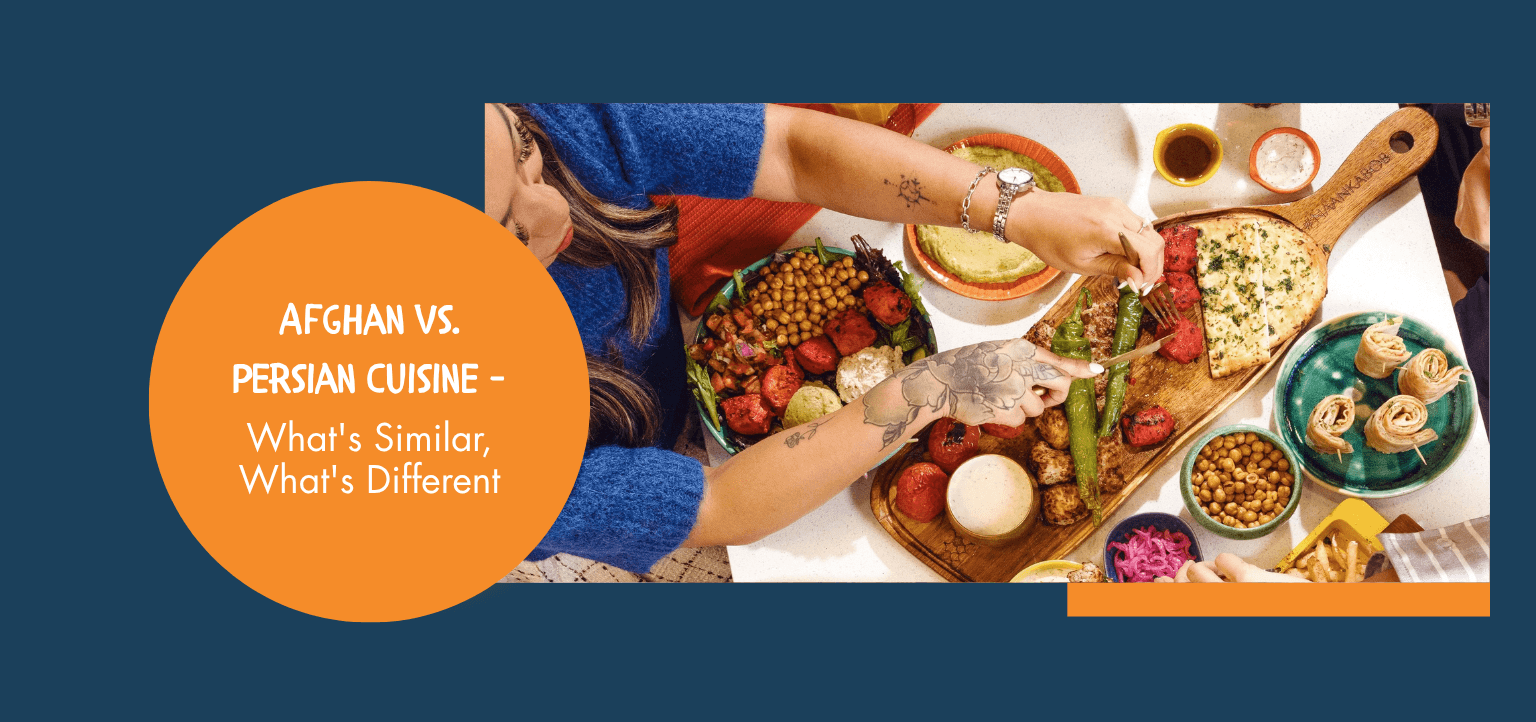
Afghan and Persian cuisines confusing you? Check out this easy guide on similarities, differences, and where to experience authentic Afghan food in downtown Toronto.
Quick Bites
-
Afghan and Persian foods share many regional ingredients, such as rice, lamb, saffron, pomegranate, dried fruits, and herbs.
-
The key components of Afghan cuisine are bread, rice dishes, grilled meats, and dumplings like mantu.
-
Persian cuisine includes rice dishes, stews, herbs, saffron, dried fruits, and sweet-and-sour tastes.
-
Common ingredients include coriander and herbs, but different combinations of herbs and spices can create distinct flavors.
-
When trying Afghan food in Toronto, one might start with kabobs, Qabuli rice, naan, and mantu.
Fragrant rice, grilled meat, flatbread, and the tart taste of pomegranates; at first sight, it looks like Afghan and Persian cuisines have a lot in common. Both cuisines have originated in a closely related region and have been exchanging culinary secrets for centuries; hence the commonality in ingredients like saffron, lamb, herbs, dried fruits, and rice.
However, one does not need much time to taste the distinctive flavor of each cuisine. In the case of Afghan cuisine, it includes Qabuli Palaw, mantu, charcoal-grilled kabobs, and naan bread, whereas Persian dishes include layered rice, herb-based stews, and kababs.
Thus, if you are looking for Afghan restaurants in Toronto, Persian food Toronto, or just trying to find out more about the Middle Eastern cuisine in Toronto, read on.
What is the Difference Between Afghan and Persian Food?
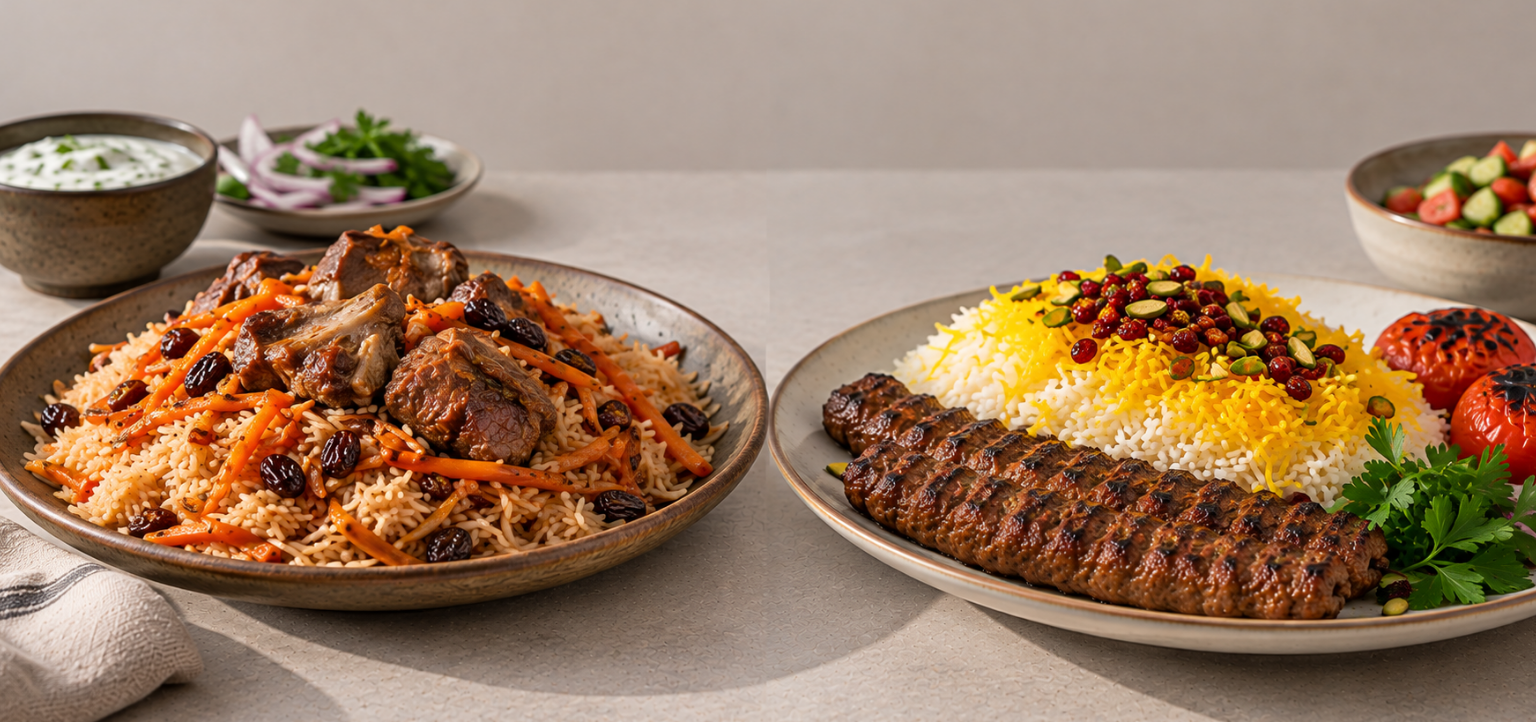
There are common elements of Afghan and Persian cuisines because of their historical relations, but at the same time, there are some differences.
First, Persian cuisine is known for the tradition of preparing dishes in Iran, and Afghan cuisine was formed in different regions of Afghanistan under the impact of Persian, Central Asian, South Asian, and neighboring food cultures.
That is why the dishes can be similar.
In the list, you will find:
-
Rice
-
Meat
-
Saffron
-
Pomegranate
-
Dry fruits
-
Fresh herbs
-
Flatbread
-
Barbecued meat
-
Yogurt sides
-
Nuts and spices
The ingredients are almost identical, but the difference begins when they are combined.
Why do Afghan and Persian foods taste alike?
Ever wondered why Afghan and Persian food taste alike? This is because Afghan and Persian foods developed in one single region and have many ingredients that have similarities.
Here is what both cuisines have in common
-
Saffron: In rice dishes, desserts, and marinades for color and flavor in both culinary traditions
-
Pomegranate: Present in fresh form, as juice or molasses in sauces and decorations
-
Lamb: The most popular type of meat used in traditional dishes from both countries
-
Rice: The key ingredient of most dishes, the most demanding part of the meal to prepare
It should be noted that just because the two cuisines have the same ingredients does not mean that their foods taste the same.
In real-world scenarios, a Persian family and an Afghan family would be able to serve saffron rice as part of their dinner table, referring to it as one of the same traditions, even when there are variations in the preparation and side dishes.
Bread, Dumplings, and Herbs: The Ingredients That Set Each Dish Apart
1. Flatbreads (Naan in Afghanistan & Persian Flatbreads)
-
The cuisine of Afghanistan has many forms of naan; bread accompanies rice, meat, and other foods.
-
The cuisine of Persia is also characterized by various types of bread, for instance, barbari and sangak. There are different differences between the bread in these cuisines, but bread remains significant in both cultures.
2. Mantu (Dumplings of Afghan Cuisine)
The mantu is the Afghan steamed dumplings stuffed with minced beef or lamb and dressed with yogurt-garlic sauce and tomato-lentil topping. There is no similar product widely used in everyday Persian cuisine.
3. Coriander Use
-
Coriander is extensively used in Afghan dishes in its fresh form, for example, in various chutneys and fillings for dumplings.
-
Persian cuisine uses more dried herbs such as dill, parsley, and fenugreek in dishes like ghormeh sabzi, with a minor role for coriander in the cooking process.
4. Cooking Method of Rice
-
Qabuli Palaw of Afghanistan features aromatic rice with other elements like carrots, raisins, and meat. Iranian cooking also has rice preparations such as chelow and polow that include methods like preparing tahdig, which means crispy rice.
-
Persian rice is usually served separately from the stew with tahdig, a golden crust.
Afghan Vs. Persian Cuisine: A Quick Comparison
|
Elements |
Afghan Cuisine |
Persian Cuisine |
|
Staple bread |
Thick, chewy naan, often the base of the meal |
Thinner bread, usually served as a side |
|
Rice style |
Qabuli Palaw: rice cooked together with lamb, carrot, and raisins |
Rice to be eaten separately, usually with crispy tahdig crust |
|
Signature dumbling |
Mantu; steamed dumplings with yogurt-garlic sauce |
Has no everyday equivalent |
|
Herb of choice |
Fresh coriander used generously |
Dried herbs: dill, parsley, fenugreek |
|
Stews |
Less dominant. Rice and grilled dishes take the center stage |
Khoresh (herb/fruit-based stews) are a core category |
|
Grilled meats |
Charcoal kabobs, often lamb or chicken |
Kabab (koobideh, joojeh), also charcoal-grilled |
|
Shared ingredients |
Saffron, pomegranate, lamb, rice |
Saffron, pomegranate, lamb, rice |
|
Sour/tangy notes |
Pomegranate molasses, yogurt sauces |
Dried lime, sumac |
|
Sweetness in savory dishes |
Raisins, dried fruit mixed into rice |
Barberries, dried fruit in rice and stews |
Why is This Comparison Important to Toronto Food Enthusiasts?
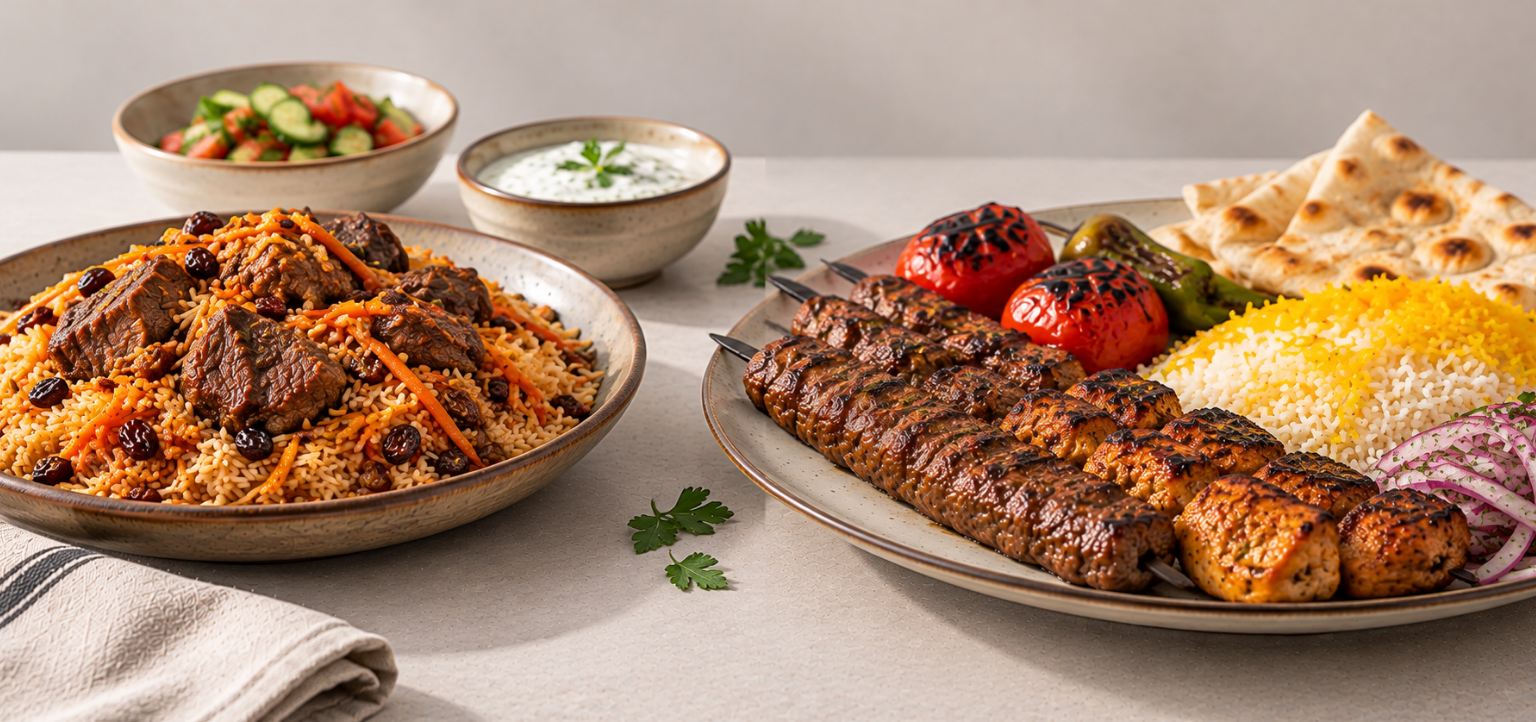
If you are browsing through Middle Eastern food in Toronto on a Friday night, you are most likely hopping from one type of restaurant to another without really understanding how they differ from each other.
Understanding the differences allows you to:
-
Make your choice based on facts and not on the menu
-
Pick out the restaurant that will give you what you want
-
Understand why two places with "kabobs" can have vastly different tastes
From our own experiences in managing an Afghan restaurant in downtown Toronto, we find that first-time diners can never point out the differences between Afghan cuisine and Persian cuisine. They only understand that "it's not quite the same".
How to Distinguish Afghan from Persian Food on a Restaurant Menu
This handy guide will come in handy when you decide what restaurant to visit next time:
-
Find "mantu" or "aushak"? Then you're looking at an Afghan menu.
-
Find "tahdig" or "khoresh"? Then it's Persian cuisine.
-
Meat and fruit in one dish with rice? Probably an Afghan Qabuli.
-
Crispy gold bottom for rice? Probably Persian.
-
Lots of fresh coriander in the sauce? Probably Afghan.
What Should You Order If This Is Your First Experience With Afghan Cuisine
Instead of ordering similar grilled meats, it will be better to choose dishes that represent diverse aspects of the cuisine for the first time.
This is Naan Kabob’s guide to your easy recipe for a first-time Afghan meal
1. Begin with kabob
Order a charcoal-grilled chicken or any other kabob that will help you get acquainted with the smoky aspect of Afghan cuisine.
2. Include Qabli rice
It will introduce you to the rice of Afghanistan, which is usually combined with rice and other ingredients and has a fragrant, slightly sweet taste.
3. Eat fresh naan
Serve it along with grilled meats, beans, or other dishes.
4. Order mantu
It will allow you to try the dumplings of Afghan cuisine.
5. Order a platter
If you eat with your friends or relatives, platters will allow them to taste different foods.
For a person used to eating Persian food, it will make the comparison easier since you can evaluate the entire meal instead of just one ingredient.
Use This Quick Checklist While Comparing Afghan and Persian Food
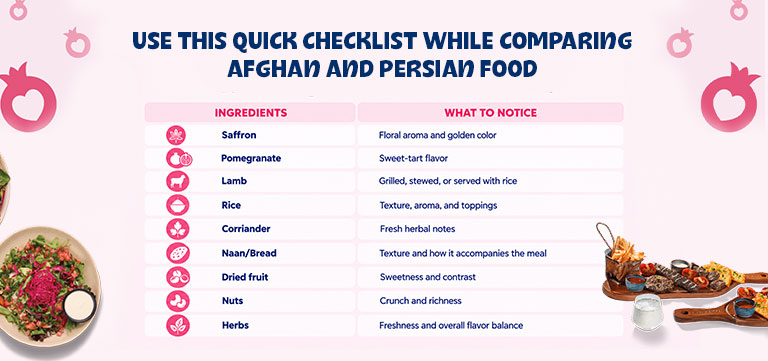
|
Ingredinets |
What to Notice |
|
Saffron |
Floral aroma and golden color |
|
Pomegranate |
Sweet-tart flavor |
|
Lamb |
Grilled, stewed, or served with rice |
|
Rice |
Texture, aroma, and toppings |
|
Corriander |
Fresh herbal notes |
|
Naan/Bread |
Texture and how it accompanies the meal |
|
Dried fruit |
Sweetness and contrast |
|
Nuts |
Crunch and richness |
|
Herbs |
Freshness and overall flavor balance |
Where Should You Go to Have Your Meal During Toronto's September Events
If you will be spending some hours on the streets of Toronto, consider having a meal that is not just a snack.
If you are looking for Afghan cuisine in downtown Toronto, try Naan Kabob, which serves freshly made kabobs, naan, Qabuli rice, mantu, and other favorite dishes of Afghan cuisine.
240 Queen Street West
Address: 240 Queen St W, Toronto, ON M5V 1Z7
This option will suit visitors who are staying around TIFF, King Street West, and The Word On The Street.
691 Yonge Street
Address: 691 Yonge St, Toronto, ON M4Y 2B2
This option is convenient when you will be heading towards Cabbagetown and Yonge Street.
Typical Mistakes that People Commit While Comparing These Cuisines
❌Considering Middle Eastern food to be one cuisine. Afghan, Persian, Lebanese, and Turkish foods have individual histories, despite being listed as middle eastern food in menus of Toronto.
❌Making mistakes about kabob types. All the dishes that are grilled on skewers aren’t similar; they vary in their marinades, spices, and grilling methods.
❌Ignoring bread as a key ingredient in the dish. Naan in Afghan food is not a side but an important part of the dish.
❌Assuming there will be high levels of spiciness. Both cuisines aren’t very spicy or hot; their dishes consist of aromatic spices, such as saffron and cumin.
Final Bites
The culinary traditions of Afghanistan and Persia have many similar elements because of their common origin. However, naan flatbreads, mantu dumplings, and stronger coriander are unique features of Afghan cuisine that set it apart from other cuisines.
And how can one get to know the distinctive features better?
Want some authentic Afghan food in downtown Toronto? Visit the nearest Naan Kabob restaurant and order any Qabuli rice or kabobs; very useful if you are attending TIFF, Cabbagetown Festival, or The Word On The Street in September.
Frequently Asked Questions
1. Is Afghan food the same as Persian food?
Not exactly. While they have common ingredients such as saffron, lamb, and rice, they are different from each other in terms of bread type, mantu (dumpling) dishes, and herbs; Afghan cuisine uses fresh coriander.
2. What is mantu?
Mantu is a dish consisting of steamed dumplings of Afghan origin that are stuffed with beef or lamb, garnished with yogurt sauce mixed with garlic, and topped with tomato and lentil paste.
3. Why do Afghan and Persian foods sometimes taste alike?
Afghan and Persian cuisines were both formed on the same trade routes; hence their similarities in terms of spices and ingredients, including saffron and pomegranate, although preparation is different.
4. Which is the best Afghan food restaurant in Toronto for 2026 festival season?
When we think of the 2026 festival season coming in September with TIFF, Cabbagetown Festival, and The Word On The Street, then Naan Kabob restaurants at Queen Street West and Yonge Street are two perfect choices.